How Often Should You Sealcoat Asphalt in North Carolina?
Proper sealcoating isn’t just an aesthetic choice; it’s a critical step in preserving the life of your asphalt driveway or parking lot. For homeowners and maintenance planners in North Carolina, understanding the sealcoating frequency Raleigh requires can save thousands in repair costs over time. With our region’s hot summers, humid conditions, and occasional freeze-thaw cycles, asphalt is exposed to a unique set of stressors that accelerate deterioration.
The main question many property owners ask is: “How often should I sealcoat my asphalt in NC?” The answer isn’t one-size-fits-all, because multiple factors traffic load, exposure to sunlight, quality of asphalt, and type of sealant, determine how long a surface will last before needing a new coat.
In this guide, Tier One Asphalt will walk you through the essentials of asphalt sealcoating, explain the major factors affecting longevity, and provide practical frequency recommendations for both residential and commercial properties. You’ll also learn about the risks of DIY sealcoating, signs it’s time for a recoat, and how proper maintenance between sealcoatings can maximize your asphalt’s lifespan. By the end, you’ll have a clear understanding of how to schedule your sealcoating for optimal results and cost-effectiveness in Raleigh and throughout North Carolina.
If you’re interested in professional sealcoating services, Tier One Asphalt offers expert solutions tailored to both residential driveways and commercial lots across the Raleigh area.
Understanding Sealcoating: What It Does & Why It Matters
At its core, sealcoating is the process of applying a protective layer of specialized asphalt sealant to the surface of your pavement. This layer acts as a shield against moisture, UV rays, oxidation, and chemical spills. Over time, asphalt naturally degrades due to these elements, leading to cracks, fading, and structural damage.
Key Benefits of Sealcoating:
- Barrier Against UV Damage: Prolonged sun exposure breaks down asphalt binder, causing surface cracking and discoloration.
- Moisture Protection: Prevents water infiltration that can lead to potholes and subgrade damage.
- Chemical Resistance: Shields asphalt from oils, fuels, and other chemicals that accelerate deterioration.
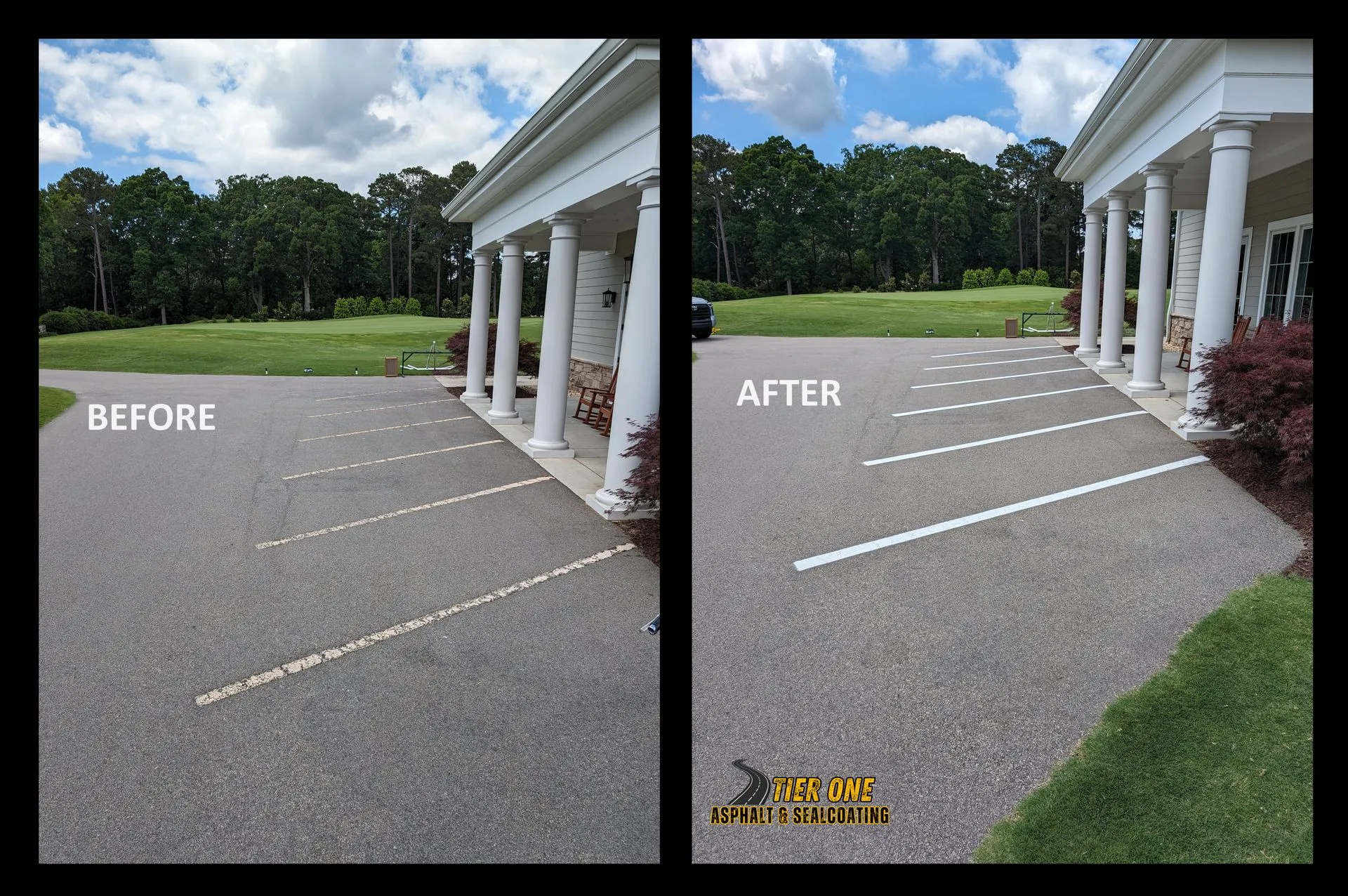
- Enhanced Appearance: Keeps driveways and parking lots looking fresh and uniform.
It’s important to distinguish between residential and commercial sealcoating needs. Driveways typically experience lighter traffic, whereas commercial lots endure heavy traffic wear from trucks and customer vehicles. Tailoring your sealcoating schedule accordingly ensures that both types of pavement remain durable and visually appealing. For expert residential and commercial sealcoating in Raleigh, NC, visit Tier One Asphalt Sealcoating Services.
Key Factors That Drive Sealcoating Frequency in Raleigh / NC
Understanding the factors that influence sealcoating frequency is essential for proactive maintenance. Several environmental and usage conditions in North Carolina affect asphalt longevity:
A. UV Damage & Sun Exposure
North Carolina receives high UV exposure, which accelerates asphalt oxidation. Over time, sunlight causes the surface to become brittle and lose flexibility. East-west-facing driveways or parking lots with no shade experience the most intense UV degradation. Proper sealcoating mitigates these effects by forming a protective top layer.
B. Weather Cycles & Climate Stressors
Raleigh’s climate includes hot summers, high humidity, and occasional freezing winters. Asphalt undergoes thermal cycling, expanding in heat and contracting in cold which increases cracking risk. Rainwater and storm runoff can penetrate unprotected asphalt, leading to further deterioration. Regular sealcoating shields your pavement from these stressors, preserving its structural integrity.
C. Traffic Loads & Use Intensity
Residential driveways typically handle light vehicle traffic, while commercial lots face constant wear from cars, trucks, and heavy equipment. Turning zones and high-traffic lanes experience more stress and may require more frequent commercial sealcoating. Proper scheduling ensures these areas receive adequate protection without disrupting business operations.
D. Quality of Original Pavement & Surface Condition
New asphalt tends to hold up longer, while older surfaces with pre-existing cracks or oxidation require more attention. Regular inspections help determine when sealcoating is due, based on the pavement’s age, thickness, and maintenance history.
E. Sealant Type & Application Quality
Different sealant types, emulsion, coal-tar,and polymer-modified, offer varying protection levels. Professional mixing, proper curing, and expert application are critical. A high-quality sealant applied correctly maximizes lifespan, while improper DIY attempts can compromise results.
Recommended Sealcoating Frequency Guidelines
The optimal sealcoating frequency in Raleigh depends on property type and usage intensity:
- Residential Driveways: Typically every 2–4 years.
- Commercial Parking Lots: More frequent, around every 1–3 years, depending on traffic load.
- Inspection-Based Scheduling: Properties with unusual exposure or usage patterns may benefit from as-needed evaluations.
Example Schedule:
| Property Type | Recommended Interval | Notes |
|---|---|---|
| Residential Driveway | 2–4 years | Light traffic, partial shading |
| Commercial Lot | 1–3 years | High traffic, heavy trucks, UV exposure |
Regular inspections, especially after winter or severe storms, help identify when sealcoating is necessary. Tier One Asphalt offers comprehensive inspections to determine the ideal maintenance timeline for your property.
Signs That It’s Time to Reapply
- Faded or Dull Surface: Asphalt loses its sheen as the protective layer wears.
- Minor Cracking: Hairline cracks indicate that the surface is weakening.
- Water Absorption: If water no longer beads, it signals a moisture penetration risk.
- Granular Loss or Surface Roughness: A clear indicator of wear and oxidation.
Noticing these signs early can prevent costly repairs, ensuring your asphalt remains safe and functional.
Risks of Over-Sealing or Under-Sealing
- Over-Sealcoating: Can trap moisture, causing slippage or peeling. Too frequent coats may also prevent proper curing.
- Under-Sealcoating: Leads to oxidation, cracking, and potholes, resulting in expensive repairs down the line.
Balanced sealcoating frequency preserves asphalt without unnecessary costs.
DIY Sealcoating vs Professional Service
DIY sealcoating may seem cost-effective, but it comes with risks:
- Poor mixture ratios
- Incorrect timing (too hot, too cold, or high humidity)
- Inadequate coverage and thickness
Professional services, like those from Tier One Asphalt, ensure proper application, curing, and material quality. Advantages include:
- Long-lasting results
- Warranty-backed service
- Expertise in commercial sealcoating and residential driveways
Hiring a pro guarantees peace of mind and prevents common DIY sealcoating risks.
Special Considerations for Raleigh / NC Region
- Microclimates in Raleigh affect exposure to UV and rainfall.
- Seasonal rain patterns can impact curing times for sealcoating.
- Local regulations guide proper sealant application and environmental compliance.
Experienced contractors like Tier One Asphalt factor these conditions into every project, ensuring effective, long-lasting results.
Maintenance Tips Between Sealcoating
- Routine crack filling and minor patching
- Sweep debris regularly
- Avoid harsh chemicals and oil stains
- Inspect after heavy storms
Simple maintenance prolongs the life of your sealcoating, delaying the need for a full recoat.
Cost, ROI & Long-Term Value
- Residential Costs: Typically lower, with intervals every 2–4 years.
- Commercial Costs: Higher due to larger areas and heavy traffic, but frequent maintenance avoids major repairs.
- Long-Term Savings: Preventive sealcoating costs far less than complete resurfacing.
For Raleigh property owners, proper scheduling and professional application from Tier One Asphalt ensures maximum ROI and pavement longevity.
Conclusion & Call to Action
Regular sealcoating protects your asphalt investment, prevents costly repairs, and maintains visual appeal. For most Raleigh driveways, a 2–4 year interval is ideal, while commercial lots may require 1–3 year cycles depending on usage. Watch for signs like fading, cracks, and water absorption to schedule timely maintenance.
Trust professionals like Tier One Asphalt for inspection, sealcoating, and asphalt repair services. Protect your property and extend the life of your asphalt contact Tier One Asphalt today for a free quote and maintenance plan.
FAQs
Can you sealcoat too often?
Yes, over-sealing can trap moisture and prevent proper curing.
How long before traffic can return after sealcoating?
Typically 24–48 hours, depending on weather and sealant type.
Will sealcoating stop cracks from forming?
Sealcoating slows aging but doesn’t prevent all cracks; periodic crack repair is essential.
Is sealcoating effective in heavy rain seasons?
Sealcoating should be scheduled in dry periods for optimal curing; rainy seasons can delay application.
You might also like